
Bell Gardens Wood Flooring installs and maintains commercial wood floors in Bell Gardens, CA and the surrounding cities, including Commerce, Santa Fe Springs, South El Monte, Vernon-adjacent industrial areas and Downey. Commercial work is a different job from residential with the same materials, and the differences are mostly about traffic, scheduling and code.
The traffic difference is the obvious one. A retail floor takes in a week what a domestic floor takes in a year, which changes the finish system, the maintenance interval and sometimes the species. Specifying a residential finish for a commercial floor is the most common reason a commercial wood floor looks tired within eighteen months.
The scheduling difference matters just as much. A business cannot usually close for a week, so the work is phased, sequenced around trading hours, and planned so that each stage leaves the space usable. That is a large part of what you are buying.
Where Commercial Wood Floors Work
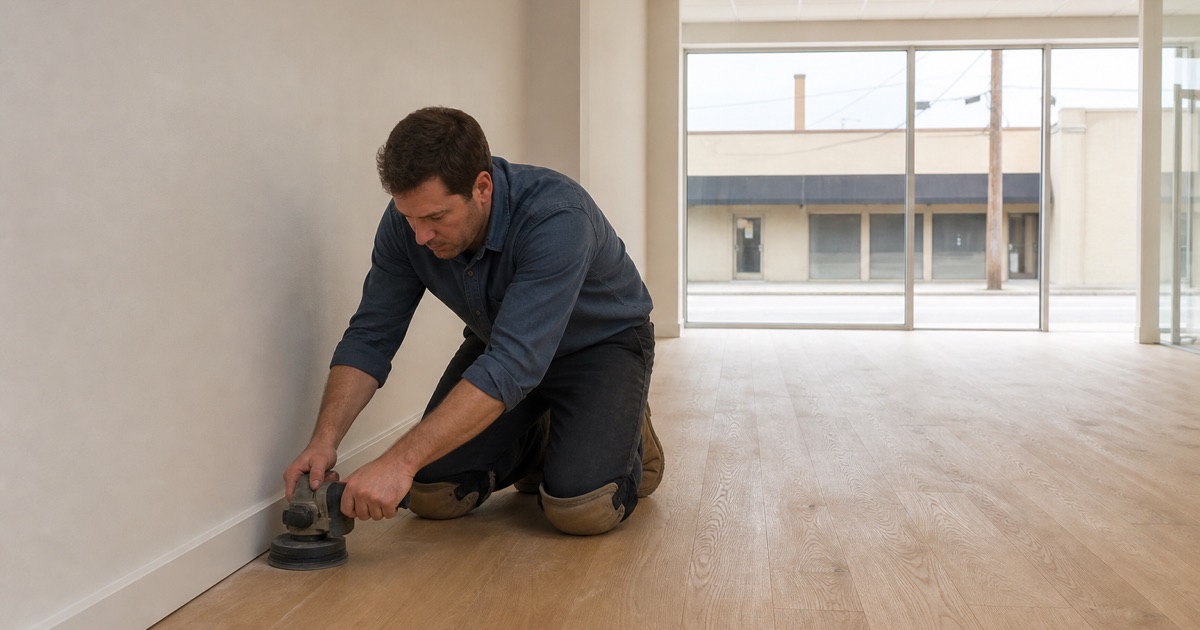
Offices and Professional Space
Offices are the gentlest commercial environment for wood and the one where it looks best, with the caveat that chair castors are harder on a finish than feet are. We specify finish systems accordingly and will point out where a chair mat or a castor change saves the floor considerable wear.
Retail and Showrooms
Retail floors carry concentrated traffic in predictable paths, so wear appears in lanes rather than evenly. Finish choice, sheen and board direction all matter here. A lower sheen conceals traffic marking substantially better than a gloss finish, which is the opposite of what people often expect.
Hospitality and Community Spaces
Restaurants, halls and community rooms combine heavy traffic with spills and frequent cleaning. Wood works in these spaces with the right finish and a realistic maintenance schedule, and we are straight about where it will not: standing water and wood remain a poor combination whatever is on top.
Specifying for Commercial Use
Finish Systems and Traffic
Commercial finishes are harder and more abrasion resistant than domestic ones and are usually applied in more coats. Moisture-cure urethane and commercial waterborne systems both have a place. All of it is specified within the 275 gram per liter limit that applies to wood coatings in this air basin under South Coast Air Quality Management District Rule 1113.
Accessibility and the Permit Question
The permit exemption for finish work in the county code Bell Gardens builds on carries a qualifier that residential work rarely meets: it applies where disabled access requirements do not apply. On commercial work they frequently do, particularly around thresholds and transitions. We raise that at quote stage rather than discovering it during an inspection.
Maintenance and Recoat Intervals
A commercial floor is kept alive by recoating before the finish wears through to the wood, and the interval is a matter of traffic rather than of years. We set a realistic schedule and will tell you when a screen and recoat is due rather than waiting until a full sand is the only option left.
Repair and Refinishing on Commercial Floors
Recoating Before It Is Too Late
A commercial floor that is screened and recoated on schedule keeps its finish protecting the wood and never needs a full sand. Once traffic has worn through to bare wood the only route back is sanding, which is far more disruptive to a working business. Staying ahead of it is the whole economics of a commercial wood floor.
Repairing Damage in a Trading Space
Localized damage in a commercial floor is repaired by replacing boards and weaving them into the field, which can usually be done in sections overnight or during quiet hours. It avoids closing the space and keeps the rest of the original floor. Where the finish has aged, we are honest about how visible a spot repair will be.
Matching Across Phases and Repairs
Wood varies between production runs, so we record the exact product, grade and finish specification for every commercial floor we lay. That record is what makes a later phase or a repair match rather than approximately match, and it is worth far more than a memory of what was ordered three years ago.
Working Around a Business
Phasing and Out-of-Hours Work
Most commercial jobs are done in sections or overnight so the space stays in use. Bell Gardens restricts construction work between 7 p.m. and 8 a.m. within 500 feet of a residential zone, which in this city covers most of it, so genuinely overnight work needs to be checked against that before it is promised rather than after.
Cure Times and Reopening
The binding constraint on reopening is cure rather than dry. We give you the date the floor can take foot traffic and the later date it can take furniture, fixtures and cleaning, because putting a retail floor back into service too early is how a new finish is damaged in its first week.
- Licensed & Insured
- 20+ Years Experience
- Free Written Quotes